Miru vs TimeCamp
TimeCamp's automatic tracking is clever. But "free" doesn't mean much when you need to upgrade for invoicing, expenses, and real reports. Here's the full comparison.
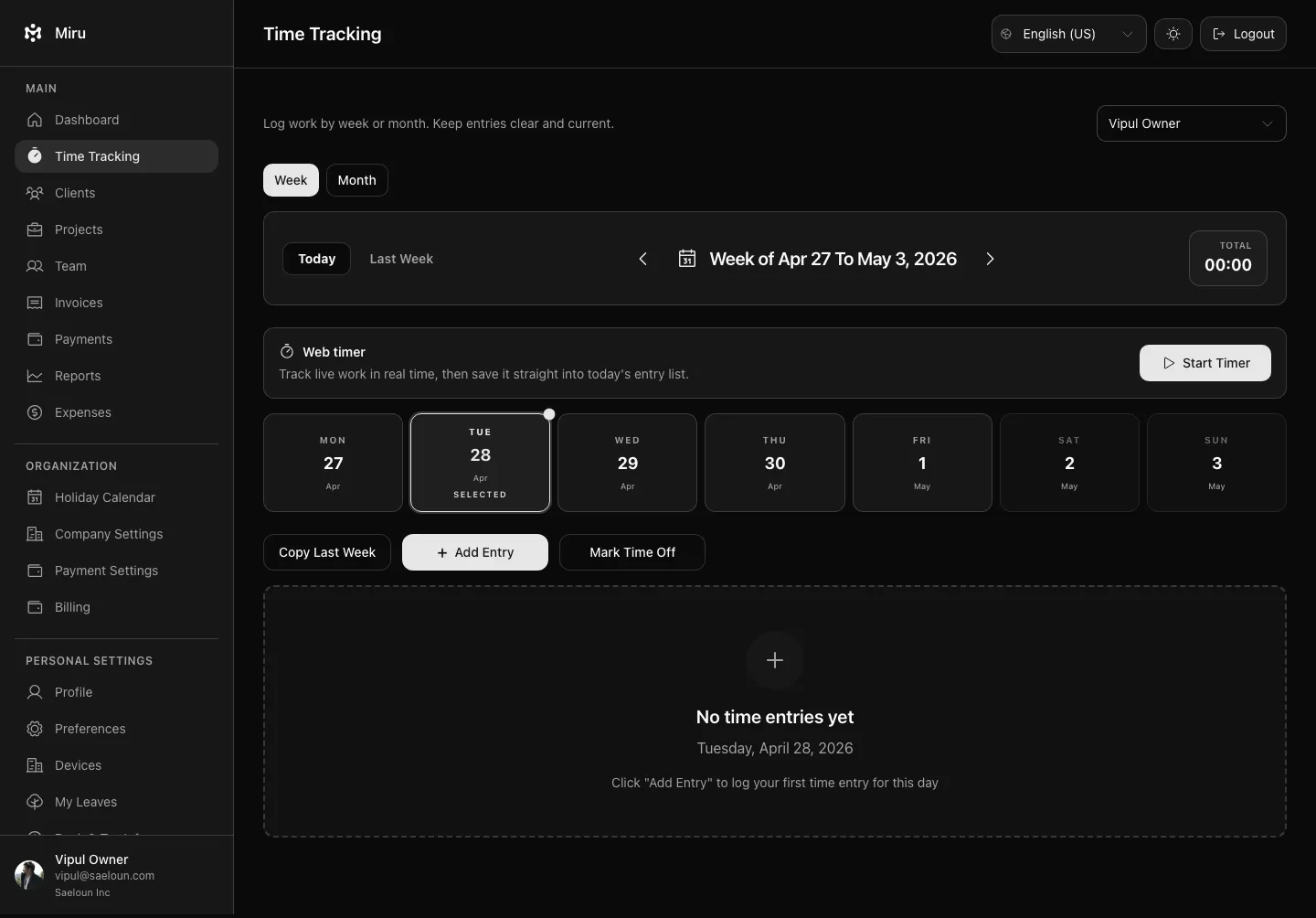
Quick verdict
TimeCamp's free plan tracks time and not much else. Invoicing, budgeting, and advanced reports require the Starter plan at $3.99/user/month or Premium at $6.99/user/month. A 20-person team on Premium pays $1,678/year. The same team on Miru pays $240/year — and that includes invoicing, expenses, CLI, self-hosting, and full source code access. No tiers to climb.
Feature-by-feature comparison
| Feature | Miru | TimeCamp |
|---|---|---|
| Price | $1/member/mo — all features | Free (limited) / $3.99-6.99/user/mo |
| Time Tracking | Timer + manual + CLI | Timer + automatic tracking |
| Invoicing | ✓ All plans | ✗ Free / ✓ Paid only |
| Expenses | ✓ | ✓ Paid only |
| Reports | 6 report types | Basic + advanced (paid) |
| Team Management | 5 roles + leave tracking | Basic roles |
| CLI | ✓ | ✗ |
| Open Source | ✓ MIT licensed | ✗ |
| Self-Hostable | ✓ | ✗ |
| Automatic Tracking | ✗ | ✓ Desktop app |
| Stripe Payments | ✓ One-click pay | ✗ |
| Dark Mode | ✓ | ✗ |
Key differentiators
No feature gates
TimeCamp's free plan strips out invoicing, budgeting, and integrations. Miru includes everything at one price — $1/member/month. Same features for a team of 2 or 200.
Open source
Miru is MIT licensed and fully open source. Self-host it. Audit it. Customize it. TimeCamp is proprietary — you get what they decide to give you.
CLI-first for developers
TimeCamp has automatic desktop tracking. Miru has a CLI that lets developers track time from the terminal. Different philosophies — Miru trusts you to know what you're working on.
Switch from TimeCamp today
$1/member/month. Full features from day one.